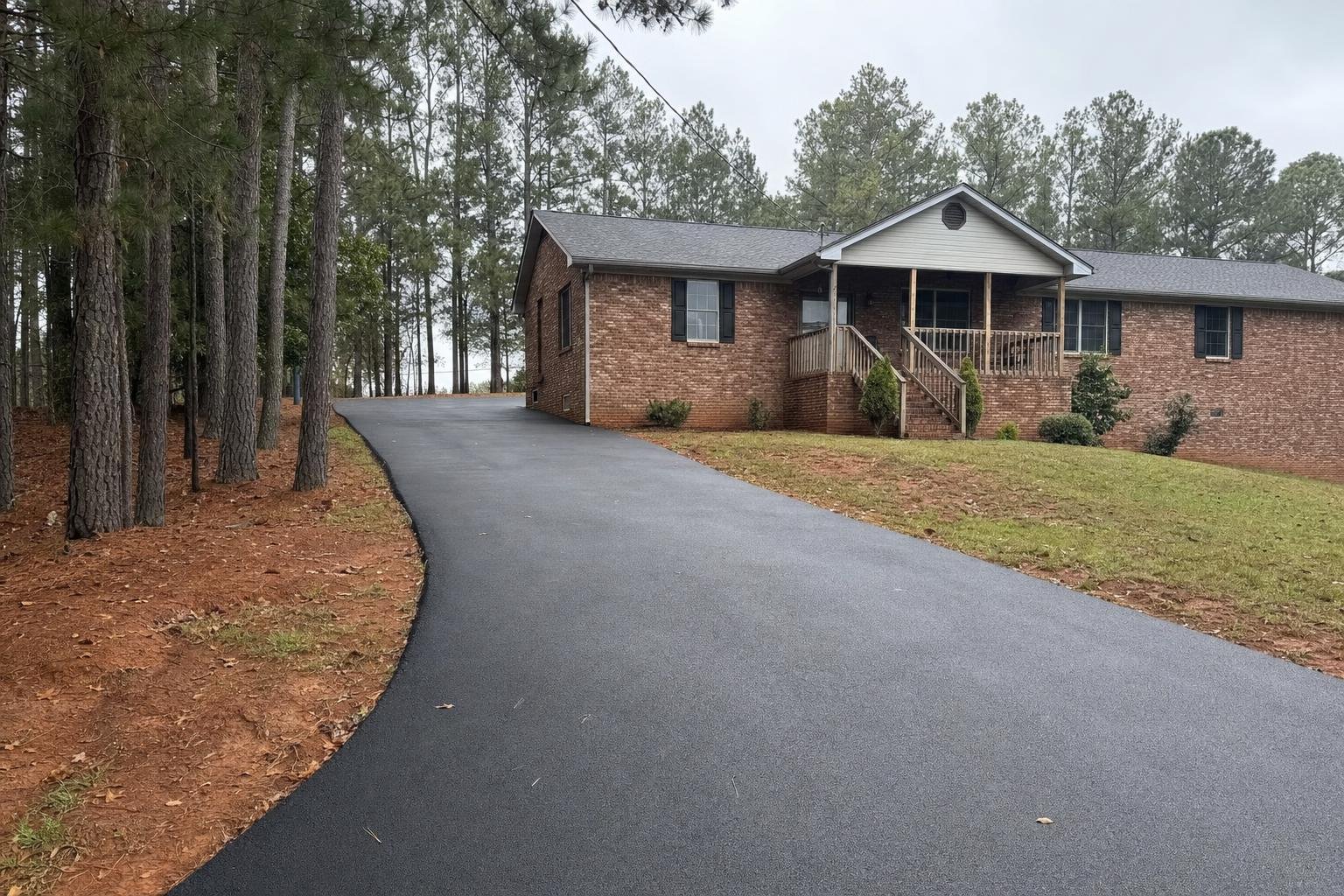
We'll walk the driveway, check where the water goes and what's under the asphalt, then write up what we'd do and why. If the driveway doesn't need what you were told it needs, we'll say so.
What has to happen to old asphalt before anything new goes on it
Whatever goes on top copies what's underneath, so most of an overlay job is prep. Before an overlay we remove loose or broken asphalt, correct deep ruts and depressions, and then tack the prepared areas. We apply the tack with an asphalt distributor so the new layer bonds to the old one. Ruts and low spots get fixed first because a fresh layer laid over them just follows the same dips and holds water in the same places. Where the damage runs below the surface layer, an overlay won't fix it, and that's a call we make on the first visit.
Next read: asphalt driveway installation. Hiring for asphalt paving in Dalton? Start with our home page.
Why does the ground under the driveway matter as much as the asphalt?
The ground under your driveway decides how long the asphalt on top lasts. Much of the soil around Dalton is high-runoff, so rain runs downhill instead of soaking in. That means the driveway has to shed water properly, or it sits in low spots and works in under the edges. On the nearly level creekside flats along the Conasauga and Coahulla, the soils are somewhat poorly drained. Driveways there may need planned drainage, not just a slope away from the house. Chert-clay soils are common across Whitfield County, and they can change volume or sit at low density, so we check the subgrade before we quote paving. We note what we find and put it in the written quote.
What do crack sealing and patching cost, and what changes the number?
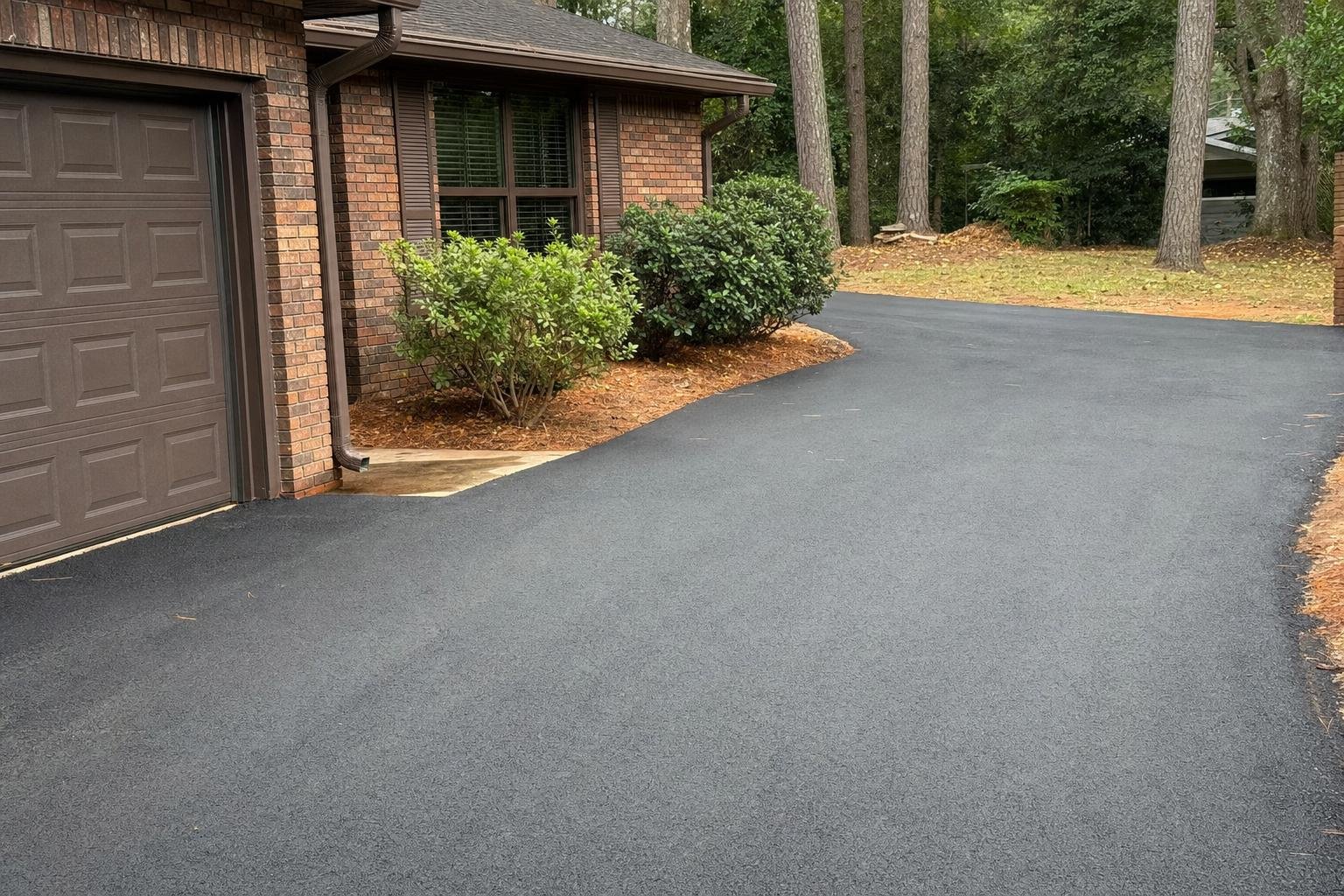
Crack sealing runs about $0.90 to $2.50 per linear foot, and repairing a pothole or larger damaged area runs about $1.80 to $4.50 per square foot. For cracks, the total follows how many feet you have and how much prep they need. Where it's appropriate we route the crack. Otherwise we clean and dry it with compressed air, then apply heated sealant. A winter freeze now and then moves the pavement a little as it freezes and thaws, and hot-pour sealant keeps water out of those cracks. Patch prices follow the square footage of damage and the amount of broken asphalt we have to remove. We compact small patches with a vibrating plate compactor and larger ones with a roller. If the damage is widespread, we'll talk about resurfacing instead of paying for patch after patch.
What happens when you call, and what you don't have to decide
On the phone we'll ask about the driveway, what you've noticed and the property, then book a visit. You don't need a diagnosis, a budget, or a decision on repair versus resurfacing. Ask for a typical range on crack sealing or patching and you'll get one on the call; the exact number is confirmed once we've seen the job. On site we measure the area, check the subgrade where we can, and look at how water moves across the property. The quote puts in writing what we found and what we recommend.
Inside the Job
Spelled out, some of the details:
- Deliver hot-mix asphalt by truck and spread it to the required width and thickness with a paver and screed.
- Begin compaction promptly after placement, using breakdown, intermediate, and finish rolling to build density and smooth the surface.
What It Typically Costs
These numbers are a reasonable place to start, and the final price goes in writing before anything starts.
$250–$775
$0.90–$3.50 per sq. ft.
$6.50–$11.50 per sq. ft.
Related Services
Call us with the details you have, no hard sell.
Updated October 2026