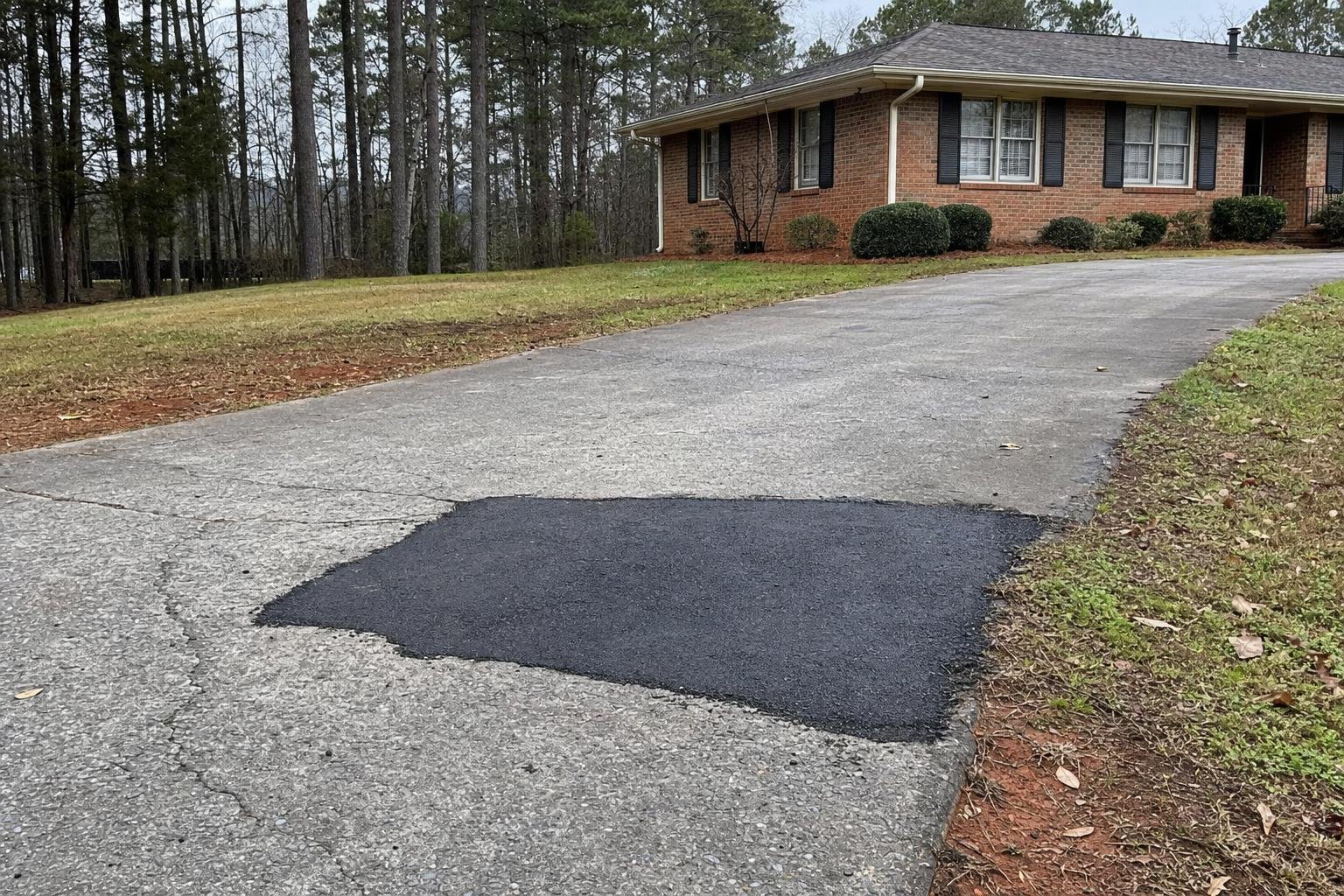
Pothole patching fills and levels the damaged asphalt so your driveway or private lane is smooth and sheds water. It fits when the pavement around the damage is still solid and only the surface has worn through or washed out in spots. North Star Asphalt Paving Co. patches potholes on residential driveways and private lanes in Dalton. Tell us where the damage is and we'll say whether a patch is the right fix, and what it will cost, in writing.
What causes a pothole in the first place?
Water is the usual cause. It gets under the asphalt, softens or washes out the base, and leaves a void the surface can't bridge, so the first heavy vehicle cracks it through. Dalton gets periodic heavy-rain events that test drainage and grading, so low spots and poorly graded driveways show it first.
The warning signs come in a rough order: a low spot that holds water after rain, a crack running out from that spot, then the thump when a tire drops in. Catch it at the first or second sign and a patch usually does the job. Water that returns to the same spot after every storm points to grading, not just a hole, and we'll flag that before any asphalt goes in. Cracking and soft spots across most of the driveway call for a bigger repair than patching, and we'll steer you that way.
See also crack sealing. Ready to hire for asphalt paving in Dalton? Start with our home page.
Helpful next: Asphalt Paving Step by Step: What the Job Involves · How to Choose an Asphalt Paving Contractor: What a Good Quote Spells Out
What does the repair involve?
We clear the hole, bond the new material, fill it, compact it, and seal the edges. Debris comes out with an air compressor and hose, a tack-coat sprayer lays the bond coat, and we compact with a hand tamper, mechanical tamper or roller until the patch is consolidated and level with the surrounding pavement.
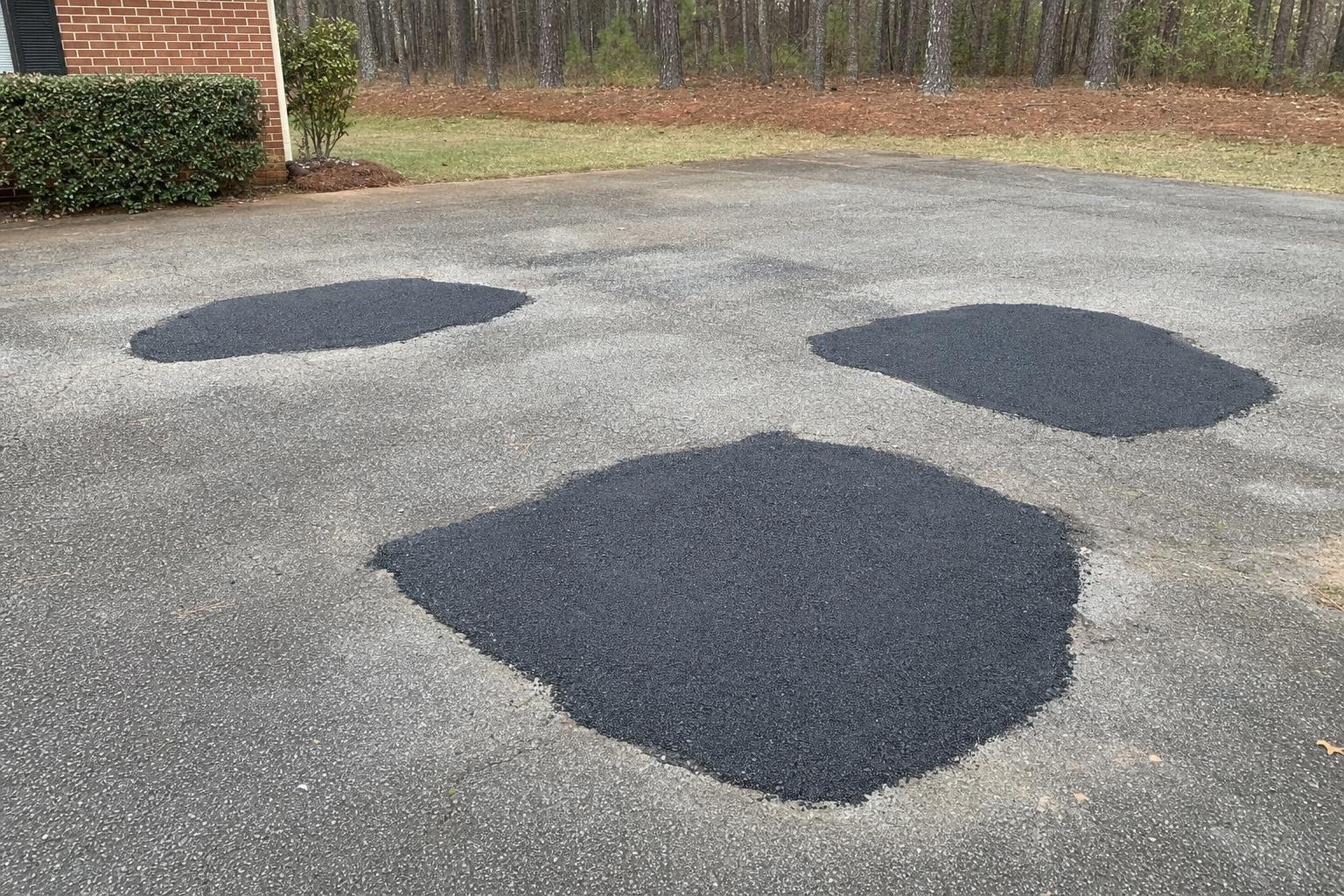
Patch size and access pick the compaction tool. A small hole in a tight spot gets a hand tamper, and a larger patch with room to work gets a mechanical tamper or roller. Grade is where a patch succeeds or fails. Finish it low and you've built a small bowl that collects water. Finish it high and you've built a bump with a seam that water runs into. Once the patch is flush, we seal its edges and clean any loose material off the roadway.
Do I need a permit to patch a pothole?
Not for a patch on your own driveway. If the work means excavating in a public street, sidewalk or alley, Dalton city code requires a written permit application first.
Most driveway and private-lane potholes sit entirely on your property, so this rarely comes up. If it does, the written application comes before any digging, so allow for that in the schedule. Tell us where the damage sits relative to the street edge and we'll say which side of that line it falls on.
What's the next step?
Call North Star Asphalt Paving Co. and tell us how many spots there are, roughly how deep, and where water stands after rain. With that we can say whether a patch suits the job.
You don't need to decide on materials or method beforehand. We pick the compaction method and confirm the grade we're finishing to once we're standing at the pothole.
What Goes Into the Work
Spelled out, it tends to involve:
- Apply a thin tack coat to the surfaces of the repair area.
- Place the patch material in horizontal lifts no more than 3 inches deep for a saw-cut repair.
Pricing Ranges
These are typical local ranges for this kind of work, and yours gets its own written price once we've seen it.
$45–$100
$90–$175
$1.80–$4.50 per sq. ft.
Related Services
Call (762) 219-8412 and describe the job, and it costs nothing to ask.