New paving, resurfacing and repair are three different jobs
Owners usually call asking for one thing and need another. A lot with a few isolated failures needs repair. A lot with a sound base and a tired surface may only need a new course of asphalt on top. A lot that is cracked and sunk across most of its area has a problem under the asphalt, and no top layer will fix that.
Surface work only lasts when what is under it is still doing its job. We would rather tell you that at the walkthrough than sell you a layer that fails in two winters. Occasional winter freezes here bring some freeze-thaw movement, and water that has gotten into a weak spot makes that movement worse every season.
For repair, we cut out failed areas and rebuild them rather than skim over them. Where the base under a spot has gone soft, we dig down to find solid ground first. Crack filling has its place on lots where the cracks are narrow and the pavement around them is still tight. It is a way to keep water out, not a cure for a failing base, and we will say which one you are looking at.
High-traffic zones and patching history
High-traffic zones get extra attention. Entrances, drive lanes and the spots where trucks turn tend to fail before parking stalls do, so a lot often needs different fixes in different corners. We mark those areas out and quote them separately when that makes sense.
If the lot already has a history of patching, we want to know. Repeated repairs in the same place usually mean the cause was never dealt with. We would rather find it than pave over it again.

How the asphalt goes down
When the paving is done in more than one lift, we clean the previous course before the next one goes on, and apply tack coat if needed so the layers bond instead of sliding on each other. A lift that is not bonded is a lift that shears off under turning tires.
Compaction is where a lot is won or lost. We keep the steel-wheel compaction roller right behind the paver and start rolling as soon as the mix can be compacted without displacement. We keep going until the mat is tight and the roller marks disappear. Wait too long and the mix cools past the point where it compacts properly. A well-rolled mat looks plain and uniform, and that is the sign it was done right.
What drives the price
That is a wide spread, and the spread is real. At those rates, a 10,000 square foot lot falls somewhere between $20,000 and $50,000. We cannot give you a number from a phone call, because the spot in that range depends on the lot itself.
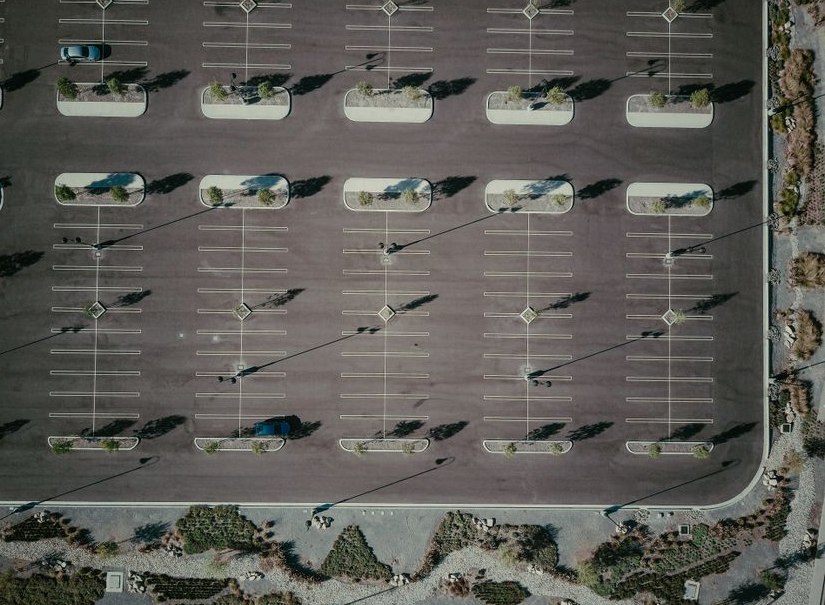
The biggest factor is what is under the surface. A lot that only needs a resurfacing course sits toward the low end. A lot that needs old pavement removed, soft ground dug out, and a new base built sits toward the high end. Drainage changes, patching volume and how many separate areas we have to work around also move the figure.
Permits, right-of-way and flood ground
Where a lot meets the street, the rules change. If a Dalton driveway or lot job involves excavation in a public street, sidewalk or alley, we file a written permit application first. Pavement in the street right-of-way must use graded aggregate base under plant-mix asphalt. An entrance apron crossing the right-of-way is the same kind of work, so we handle the city requirements before breaking ground.
Part of the land around Prater's Mill on Coahulla Creek is a special flood-hazard area. If your lot is near there and the job changes grades or drainage, check your flood exposure before we start. Regrading a lot moves water somewhere else, and you want to know where it is going before the new surface is down.
Getting Started Is Simple
-
Call or Text
Tell us what you're seeing and when it started, you'll get a straight answer, not a sales pitch.
-
On-Site Inspection
A tech inspects the problem in person, no guessing from photos, no drive-by quotes.
-
Clear, Written Quote
You get the scope and the price in writing before any work starts. No surprises.
-
We Do the Work
Our crew does the work, checks it, and leaves the site clean. You see everything we did.
What this typically involves:
- Deliver the specified asphalt mix by truck, checking delivery tickets and mix temperature against project requirements.
- Use the paver to place asphalt in planned lanes to the required lines and grade, correcting surface irregularities behind the paver.
Related Services
Areas We Serve
Based in Dalton, GA. Call (762) 219-8412 to confirm coverage for your address.
Why Dalton Homeowners Call
- Free EstimatesYou pay for work, never for the quote.
- No-pressure estimatesThe estimate is information, not an obligation.
Call (762) 219-8412 for a free quote.